Military Forensic Science - Lt. 2. Matthew Peterson, an intelligence and security officer with the 2nd Engineer Battalion, scans for enemy activity while participating in the Full Spectrum Operations exercise at the National Training Center in Fort Irwin, California. : U.S.) See the original
WHITE SANDS MISSILE RANGE, N.M. (December 3, 2009) - Soldiers with the 2nd Engineer Battalion will use modern reconnaissance techniques to find and capture insurgents when they deploy next year.
Military Forensic Science
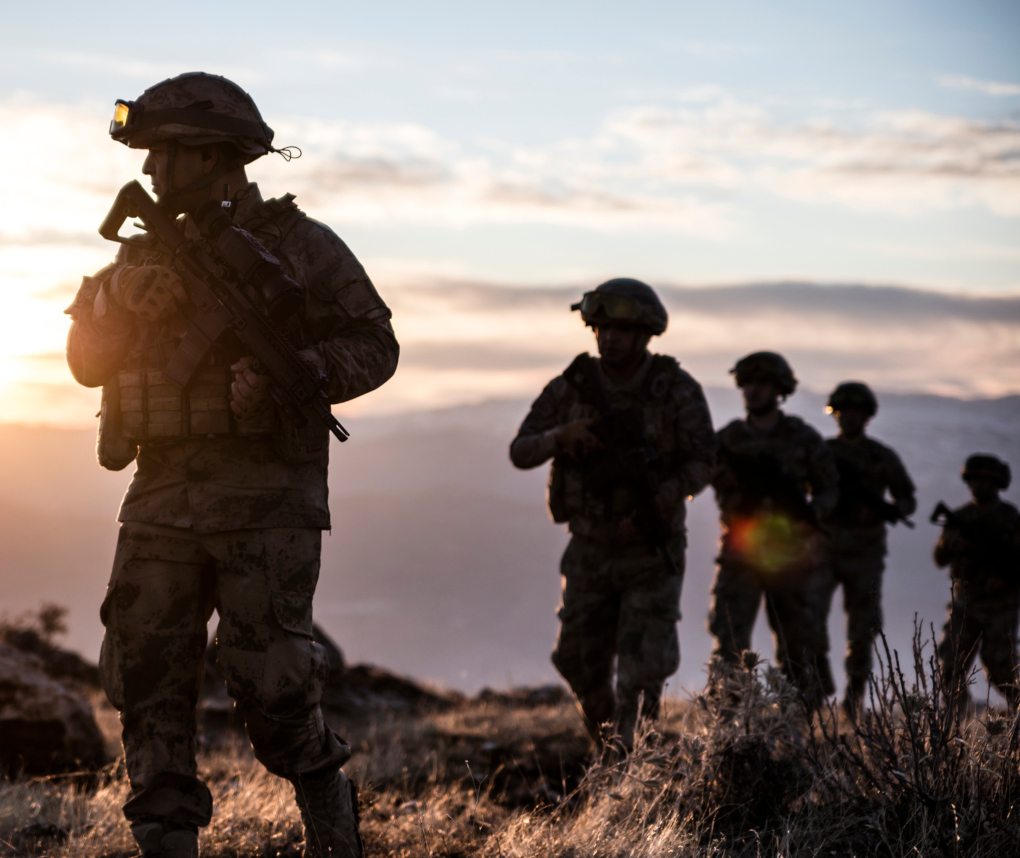
Like several popular investigative television programs, members of the 2nd Engineer Battalion analyze evidence of enemy activity to determine locations, motives and activities.
What Is Rotc?
Using the battalion's time at the National Training Center at Fort Irwin, California, intelligence officers like 2nd Lt. Matthew Peterson had the opportunity to practice his skills in identifying and evaluating enemy activity by analyzing evidence found on the battlefield.
"What I'm looking for is something that can put me in the enemy's position, so that I can find out if they eat this food or use these things (in a certain city) instead of (another). This way, we can understand what routes they use. "Do it, what cars to look for, what people and what kind of IEDs are made," said Peterson while examining the abandoned battery that was recently found. A color with IED activity.
Analyzing evidence like this can go a long way in helping US and allied forces determine who the enemy is and how to deal with it, while helping to keep the route clear. "If (our soldiers) carry something like a wire, which is specific to a store (certain city), I can answer the question - 'Where is the enemy coming from?'" Answering two or three such questions helps Peterson identify the enemy |
Part of what makes Peterson's research so effective is his coordination with other units. This allows him to gather intelligence and forensic data about the larger operating environment. in that area," Peterson said.
Why Russia Is Deploying Siege Tactics In Ukraine
One of Peterson's goals is to expand the definition of what soldiers consider to be valuable evidence. While soldiers now focus on the actual explosive materials found in IEDs, Peterson wants them to learn to include other materials that could be useful to insurgents. "I'm trying to spread the mindset that something as small as a nine-volt battery can be in a detonator and we know there are fingerprints that I can trace to somebody," Peterson said.
Once they have the evidence, Peterson and his team can use other sources outside the unit to help analyze or determine the value of the source of information. "One of the guys is a trained battlefield forensics person and knows how to handle these things. He made sure he went to a team that could do the proper lab analysis."
Participating in deployment readiness training at NTC gives Peterson the opportunity to use a variety of materials that may not be available during training at White Sands Missile Range. "I can do the theory in White Sands, but in reality I don't have the personalities and the things connected to the network of real enemies who actually set IEDs (CRIME) everywhere: on-post and off, in the garrison and even in the zone war. , being a commando crime investigation agent must be ready to solve cases anytime, anywhere.
"Criminal investigations on the battlefield are different than in garrison," said Special Agent Ronald Meyer, former head of the Forensic Training Branch of the US Military Police Academy. They present their own challenges, including the heat, often limited time to process crime scenes and the constant threat of attacks, there is no possibility of finding evidence of horrific war crimes like the mass graves processed in Iraq in 2003. .
Law And Public Service Career Cluster
"The threat is different," he said. 'We cultivate a lot of cemeteries. I'm not worried about being in one place for an extended period of time and exposing myself to the enemy... here at Fort Leonard Wood, Mo. ... So it's very different. '
Ordinary soldiers, fascinated by the forensics they watch on television crime shows, become force multipliers for agents. In the past, a unit might have cleared a building and moved or detonated an improvised explosive device, but now it might dust for fingerprints, take water bottles for DNA testing and collect other evidence first.
Meyer actually sends mobile training teams to places like the National Training Center at Fort Irwin, California, to teach soldiers about site exploitation and battlefield forensics. In addition, the brigade provides combat teams with CID battlefield forensics kits that include fingerprint powder, brushes, cards and rubber gloves.
A new GPS-enabled camera/computer/printer for soldiers is also in the works to label and record evidence, according to Jeff Salard, director of science and technology (research and development) at the US Forensic Laboratory at Fort Gill.
Veterans And Military
"We call these tools site exploit tools," he said. 'Now... get down, I'm in a fight, I've got gloves, I've got a helmet.' I have a digital camera, I hope I have a notepad .... It would be nice if we could give people a digital camera that is GPS-enabled, that maybe has a way to input some information, and maybe even a small printer attached that can give that. Barcode so this camera knows who I am, I know why I'm there... I know where I am. I take a picture of this thing. I can have a screen or something where I can type a little bit of information about it, one line. Then I press print and now there's a bar code. I don't need a lot of notes
'In part two, we join the biometrics community. The guys in the field already have to carry tactical biometric collection devices.... So wouldn't it be great if we went together with them and said, instead of going, 'This is your site exploit device , this is about your biometrics. . ,' if we just go, 'Here's a tool that works for all of that.'
'And we're also working on a cyber piece so that there's a hidden computer in the device ... that allows you to ... find some files .... It's a USB device, so if I plug it in. Computer, come on... see if there are any bad files I'm glad...whatever makes them (less carrying stuff)....seems to be a common cry....you just carry it. We just want to make you more capable,' continued Salards

Until now, investigators had to send all the evidence to the country for processing in USACIL But in 2005, the first joint mission forensic facility was established in Iraq that collected fingerprints, weapons and even DNA. JEFFs have also since been deployed in Afghanistan and are ready to deploy additional labs on an as-needed basis.
What The Armed Forces Can, Can't, And Might Do At The Border
Some laboratories are still being developed, and more than 150 technicians have not yet been able to hire, but the main goal is to rotate the team and spend two months statewide every month, according to Col. Martin Roe, head of the campaign's forensics division.
"The challenge comes, you know, all the technology and all the processes here are well established," he said. 'How to take and apply to areas where you don't have power all the time, or you don't have clean water or you have dust and sand' and rigged up the equipment to run that way. The environment is a big challenge. '
Evidence processed at JEFF has been used to link senior Taliban leaders to crimes, update watch lists, improve troop protection, and prosecute criminals in Iraqi courts.
``As far as I know, everyone was very satisfied with the first rotation and the support they provided,'' said Georgi Mikulski, a CID JFF special agent operations specialist who recently returned from Afghanistan. "It takes time to get any forensic data to the US, which means soldiers' lives are saved." If we process the evidence and it leads to some sort of active investigation, or gives some intelligence or data to the combatant unit, it is certainly very beneficial. Having assets on site or in theater (a) provides a more timely exchange of information
A Systems Approach To Integration Of Military Operations And Law Enforcement Investigations: Toward A Unified Forensic Intelligence Model
"We take the weapon, we process it for DNA, we process it for fingerprints. We send it to the Firearms and Equipment Register. Maybe this weapon has been fired at our soldiers before and we return the round, and we compare it and we can tie it directly to the group or maybe
Military drone range, laser range finder military, military range bags, military range targets, long range military radio, military radio range, military range finder, military long range binoculars, range rover military discount, military range rover, range of military drones, military range bag
0 Comments